It’s 1:00 PM.
Half the office is deciding where to order lunch from. Some employees are comparing delivery apps, others are waiting for their orders, and a few are stepping out to grab a quick meal.
It might seem like a normal part of the workday, but these daily routines can quietly affect productivity, collaboration, and even employee satisfaction.
As businesses continue to grow, many leaders are asking an important question:
Is it better to rely on food delivery apps, or invest in an office cafeteria?
Let’s compare both options and see which one truly supports a productive workplace.
The Rise of Food Delivery Apps
Food delivery platforms have made ordering meals incredibly convenient. Employees have access to countless restaurants and cuisines with just a few taps.
Benefits of food delivery apps:
- Wide variety of food choices
- Easy online ordering
- Flexible meal preferences
- Suitable for occasional office lunches
However, convenience doesn’t always mean efficiency.
The Challenges of Food Delivery in Offices
While food delivery apps offer variety, they also introduce several workplace challenges.
1. Unpredictable Delivery Times
Orders may arrive early, late, or at different times, making lunch breaks longer than planned.
2. Productivity Loss
Employees often spend time browsing menus, comparing restaurants, tracking orders, and coordinating deliveries.
These small interruptions add up over time.
3. Inconsistent Food Quality
Meals from different restaurants can vary in taste, freshness, and portion size, leading to mixed employee experiences.
4. Delivery Delays During Peak Hours
Rain, traffic, or high demand can delay orders, leaving employees waiting longer than expected.
Why an Office Cafeteria Makes a Difference
A professionally managed office cafeteria offers consistency, convenience, and a better overall dining experience.
Employees know exactly where to go, what to expect, and when their meals will be ready.
Instead of spending time deciding what to order every day, they can enjoy a smooth and hassle-free lunch break.
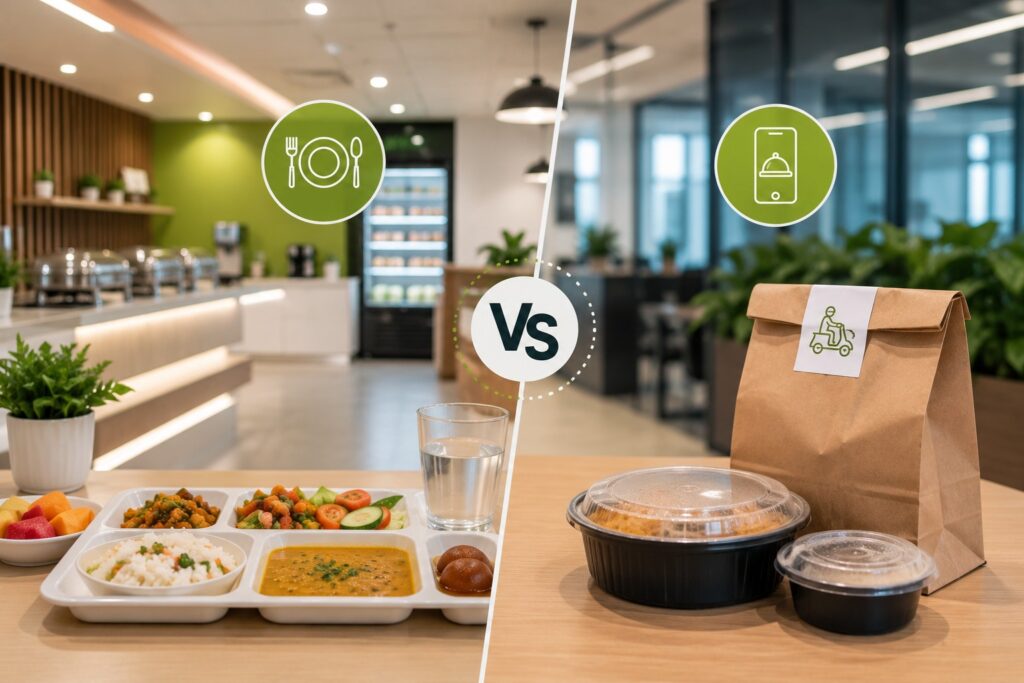
Office Cafeteria vs. Food Delivery Apps
| Office Cafeteria | Food Delivery Apps |
|---|---|
| Meals are ready on time | Delivery times can vary |
| Consistent food quality | Quality depends on restaurant |
| Saves employees’ time | Time spent browsing and waiting |
| Encourages team lunches | Employees often eat separately |
| Supports workplace culture | Individual dining experience |
| Easier for employers to manage | No centralized meal planning |
While food delivery apps are convenient for occasional use, an office cafeteria creates a more structured and productive dining experience.
The Impact on Employee Productivity
Lunch breaks are essential for recharging.
But when employees spend too much time choosing restaurants, waiting for deliveries, or leaving the office, valuable work time is lost.
An office cafeteria helps employees:
- Enjoy meals on time
- Return to work refreshed
- Spend less time waiting
- Maintain a consistent daily routine
Small improvements in daily routines often lead to noticeable improvements in productivity.
Building Workplace Culture Through Shared Meals
Some of the best workplace conversations happen outside meeting rooms.
Sharing lunch with colleagues encourages:
- Team bonding
- Cross-department collaboration
- Informal discussions
- Better communication
An office cafeteria naturally becomes a place where employees connect, creating a stronger workplace culture.
Food delivery apps rarely create the same shared experience.
Employee Well-being Matters
Modern employees care about what they eat.
A professionally managed cafeteria can provide:
- Freshly prepared meals
- Healthy lunch options
- Balanced nutrition
- Seasonal menus
- Hygienic food preparation
When healthier food is easily available, employees are more likely to make better meal choices.
Is an Office Cafeteria Cost-Effective?
Many businesses assume an office cafeteria is expensive.
In reality, it often helps organizations:
- Simplify meal management
- Reduce time lost during lunch breaks
- Improve employee satisfaction
- Support long-term workplace efficiency
When viewed as an investment in employee experience rather than just a facility, the value becomes much clearer.
Which Option Is Right for Your Business?
Food delivery apps work well for occasional meals or small teams.
However, as organizations grow, managing daily lunches becomes more challenging.
A dedicated office cafeteria or professional corporate catering solution offers:
- Reliable meal service
- Better time management
- Consistent food quality
- Improved employee experience
- A stronger workplace culture
For businesses focused on long-term growth, this often proves to be the more practical solution.
Final Thoughts
Food is more than just a daily necessity it’s part of the workplace experience.
While food delivery apps offer flexibility, they often come with delays, inconsistent quality, and lost productivity.
A well-managed office cafeteria creates a smoother workday, encourages collaboration, and helps employees feel valued.
At Ginger Foods, we help businesses create workplace dining experiences through reliable corporate catering, office cafeterias, and food solutions designed to support happier, healthier, and more productive teams.
Because when employees don’t have to think about where lunch is coming from, they can focus on what matters most.
Frequently Asked Questions (FAQ)
Is an office cafeteria better than food delivery apps?
For growing businesses, an office cafeteria often provides more consistent meal quality, saves time, and supports employee productivity and collaboration.
Can a small office benefit from corporate catering?
Yes. Professional catering services can be tailored to businesses of all sizes, making quality meals accessible without the need for a full cafeteria setup.
How does an office cafeteria improve workplace culture?
Shared meal spaces encourage employees to connect, collaborate, and build stronger relationships across teams.
What should businesses consider before setting up an office cafeteria?
Consider employee count, meal preferences, available space, food safety standards, and whether partnering with a professional catering provider would be more efficient.