Every business wants a productive workforce. Companies invest in better technology, employee training, and modern office spaces to help teams perform at their best. But there’s one factor that’s often overlooked the food employees eat every day.
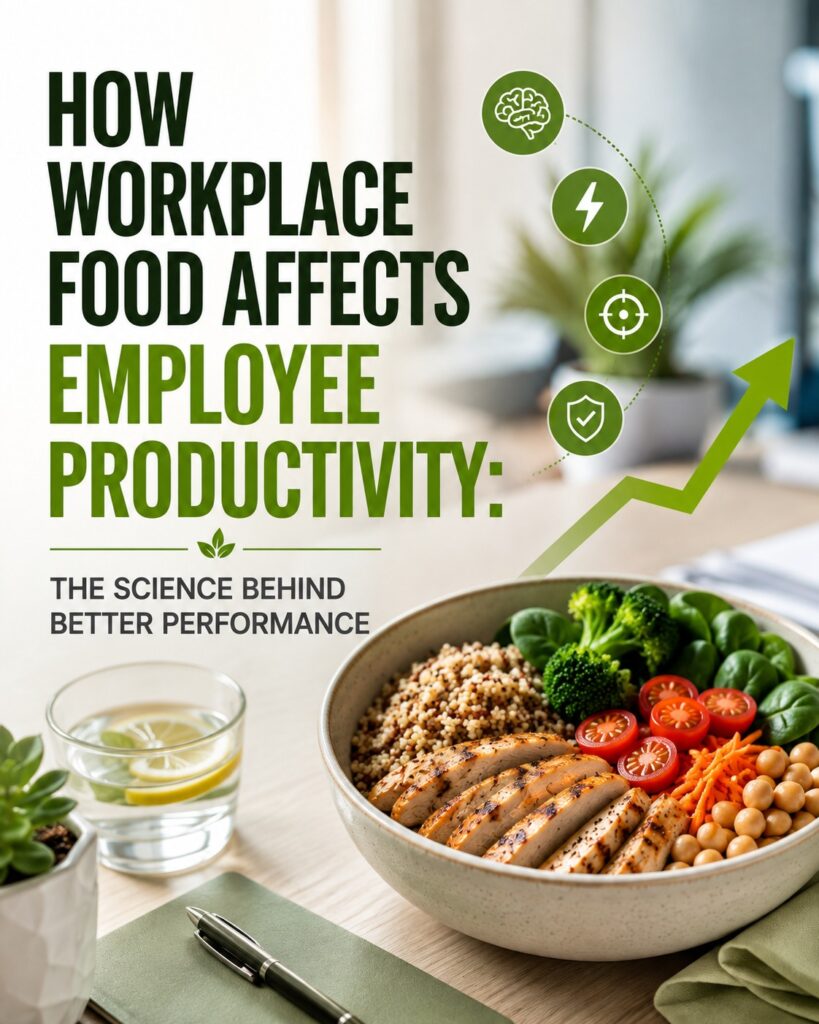
Workplace food isn’t just about satisfying hunger. It directly affects energy levels, concentration, mood, and overall job performance. When employees have access to nutritious meals and convenient dining options, they can stay focused, work more efficiently, and feel better throughout the day.
Let’s explore the science behind how workplace food impacts employee productivity and why businesses should pay closer attention to their workplace dining experience.
Why Nutrition Matters in the Workplace
The human brain requires a steady supply of nutrients to function effectively.
Foods rich in protein, healthy fats, fiber, vitamins, and minerals help maintain:
- Mental alertness
- Memory
- Concentration
- Decision-making ability
- Energy throughout the day
On the other hand, skipping meals or relying on sugary snacks can lead to fatigue, redeeeeeeeeeeeeeeeeeeeeeeeeuced focus, and lower productivity.
Simply put, better nutrition supports better performance.
1. Healthy Meals Keep Energy Levels Stable
Many employees experience an afternoon energy slump after eating heavy or highly processed lunches.
Balanced meals containing lean protein, whole grains, vegetables, and healthy fats release energy more gradually, helping employees stay active and focused for longer periods.
Instead of feeling sluggish after lunch, employees are more likely to remain productive until the end of the workday.
2. Better Food Improves Concentration
The brain consumes a significant amount of the body’s energy.
When employees eat nutritious meals, their brains receive the fuel needed for:
- Solving problems
- Managing complex tasks
- Making informed decisions
- Staying attentive during meetings
Even small improvements in daily nutrition can lead to noticeable improvements in workplace performance.
3. Reduced Stress During the Workday
Productivity isn’t only affected by work itself it can also be affected by everyday distractions.
Employees often spend valuable time:
- Searching for restaurants
- Browsing food delivery apps
- Waiting for deliveries
- Leaving the office for lunch
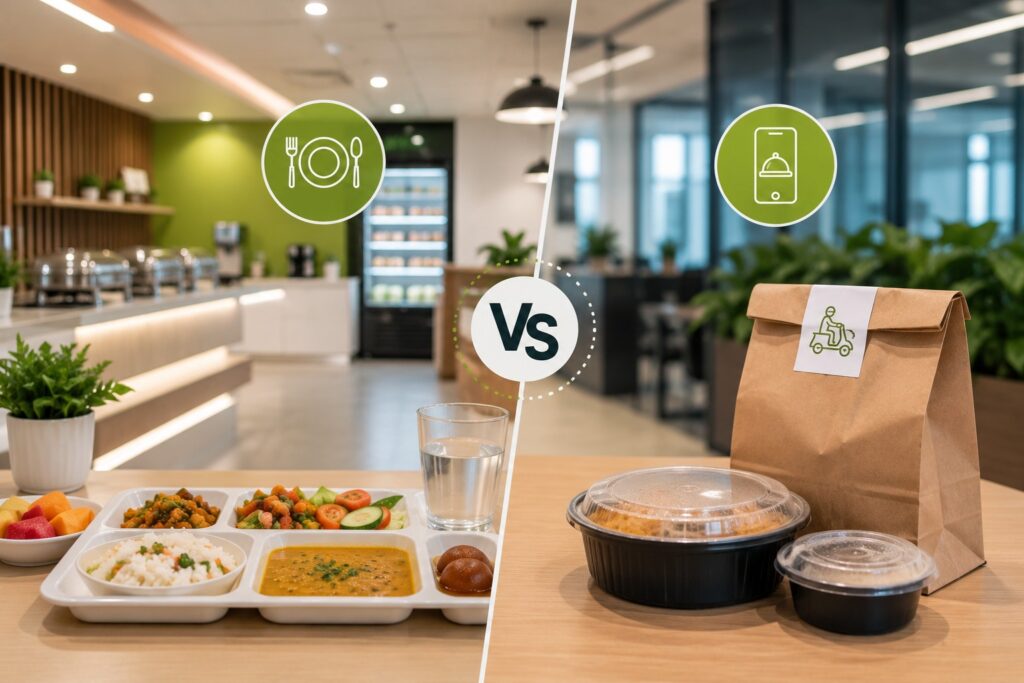
An office cafeteria or corporate catering service removes these daily challenges, making meal breaks more convenient and allowing employees to return to work refreshed.
4. Healthy Food Supports Mental Well-being
Nutrition doesn’t just affect the body it also influences mental health.
Balanced meals can help employees maintain:
- Better mood
- Higher motivation
- Improved emotional well-being
- Lower stress levels
When employees feel physically and mentally well, they’re naturally more engaged at work.
5. Shared Meals Encourage Collaboration
Lunch breaks offer more than just an opportunity to eat.
Shared dining spaces encourage employees to:
- Build stronger relationships
- Exchange ideas
- Discuss projects informally
- Connect across departments
Many creative ideas and meaningful conversations happen over lunch, contributing to stronger teamwork and collaboration.
6. Healthy Employees Take Fewer Sick Days
A balanced diet supports a stronger immune system and better overall health.
Employees who regularly eat nutritious meals are more likely to:
- Maintain consistent energy
- Recover faster
- Stay healthier
- Be present and productive
Supporting employee wellness through better workplace food benefits both individuals and businesses.
The Business Benefits of Better Workplace Food
Investing in quality workplace dining creates advantages beyond employee satisfaction.
Organizations often notice improvements in:
- Employee productivity
- Workplace morale
- Employee retention
- Team collaboration
- Company culture
- Overall employee experience
These outcomes contribute to a healthier and more efficient workplace.
Simple Ways to Improve Workplace Nutrition
Businesses don’t need major changes to create a healthier dining experience.
Some practical steps include:
- Partner with a reliable corporate catering provider
- Offer fresh and balanced meal options
- Provide healthy snacks in office pantries
- Introduce seasonal fruits and beverages
- Improve office cafeteria menus
- Gather employee feedback regularly
Small improvements can have a lasting impact on employee well-being and performance.
Why Workplace Food Is an Investment, Not an Expense
Many organizations view workplace meals as an operational cost.
However, when healthier food contributes to:
- Better productivity
- Higher employee satisfaction
- Stronger workplace culture
- Improved retention
…it becomes an investment in the people who drive business success.
The return isn’t measured only in meals served, but in happier, healthier, and more engaged employees.
Final Thoughts
Employee productivity depends on more than deadlines and performance targets. It starts with supporting employees in the small but meaningful parts of their workday.
Healthy workplace food provides the energy employees need to stay focused, motivated, and productive. It creates better daily experiences, encourages collaboration, and contributes to a workplace where people can perform at their best.
At Ginger Foods, we believe great workplaces begin with great food. Through our corporate catering, office cafeteria management, and workplace dining solutions, we help organizations create environments where employees feel energized, valued, and ready to succeed.
Because when people eat well, they work well.
Frequently Asked Questions (FAQ)
How does workplace food improve employee productivity?
Nutritious meals provide steady energy, improve concentration, reduce fatigue, and help employees stay focused throughout the workday.
Why are healthy office meals important?
Healthy meals support employee wellness, improve mood, encourage better eating habits, and contribute to a more productive work environment.
Can corporate catering benefit employee performance?
Yes. Professional corporate catering ensures employees have convenient access to fresh, balanced meals, reducing time spent ordering food and improving the overall workplace experience.
What foods help employees stay productive?
Meals rich in lean protein, whole grains, vegetables, fruits, healthy fats, and adequate hydration are ideal for maintaining energy and focus.
How can Ginger Foods help businesses?
Ginger Foods offers customized corporate catering, office cafeteria management, and workplace food solutions designed to enhance employee productivity, well-being, and satisfaction.