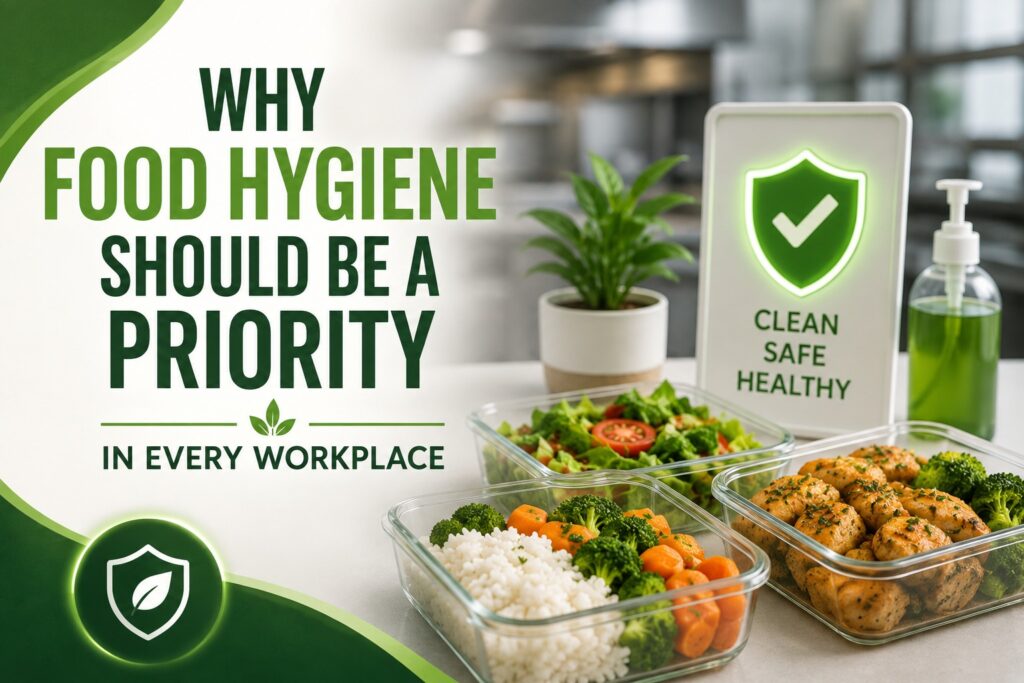
When businesses think about employee well-being, they often focus on health insurance, wellness programs, or flexible work policies. While these initiatives are important, one essential factor is often overlooked food hygiene.
Every day, employees rely on workplace meals, office cafeterias, pantry services, or corporate catering. If food is not prepared, stored, or served hygienically, it can affect not only employee health but also productivity, morale, and business operations.
A clean and safe food environment is no longer just a legal requirement—it’s a reflection of how much an organization values its people.
Let’s explore why food hygiene should be a top priority in every workplace.
What Is Food Hygiene?
Food hygiene refers to the practices and standards followed to ensure food is prepared, handled, stored, and served safely.
Good food hygiene helps prevent:
- Food contamination
- Foodborne illnesses
- Bacterial growth
- Cross-contamination
- Unsafe food handling
Maintaining these standards ensures employees receive meals that are both nutritious and safe to eat.
Why Food Hygiene Matters in the Workplace
Employees consume workplace meals almost every day. Poor hygiene can quickly affect their health and disrupt normal business operations.
A hygienic food service creates confidence, promotes wellness, and supports a healthier workplace culture.
1. Protects Employee Health
Healthy employees are the foundation of every successful business.
Proper food hygiene reduces the risk of:
- Food poisoning
- Stomach infections
- Bacterial contamination
- Viral illnesses
- Allergic reactions caused by improper handling
Providing clean and safe meals demonstrates a company’s commitment to employee well-being.
2. Reduces Absenteeism
Food-related illnesses can lead to unexpected sick leave, affecting team productivity and project timelines.
When businesses prioritize hygienic food preparation, employees are less likely to experience foodborne illnesses, resulting in:
- Fewer sick days
- Better attendance
- Improved workplace efficiency
Healthy employees contribute more consistently to business success.
3. Improves Employee Confidence
Employees notice when their workplace maintains high hygiene standards.
A clean cafeteria, sanitized kitchen, and properly handled meals build trust and reassure employees that their health is valued.
That confidence contributes to a more positive workplace experience.
4. Supports Better Productivity
Nutritious meals prepared in hygienic conditions help employees feel more energized and focused.
Employees who trust the quality of workplace food are more likely to:
- Enjoy their lunch breaks
- Return to work refreshed
- Maintain concentration
- Stay productive throughout the day
Healthy food and safe food go hand in hand.
5. Protects Your Company’s Reputation
Food safety isn’t just about employees it also reflects your organization’s professionalism.
Poor hygiene practices can damage a company’s reputation and reduce employee confidence.
Maintaining high food safety standards demonstrates responsibility, care, and attention to quality.
Key Food Hygiene Practices Every Workplace Should Follow
A professional workplace food service should focus on:
- Clean and sanitized kitchens
- Fresh, high-quality ingredients
- Proper food storage
- Safe cooking temperatures
- Hygienic packaging
- Clean serving equipment
- Regular kitchen inspections
- Personal hygiene for food handlers
- Cross-contamination prevention
- Compliance with food safety regulations
These practices create a safer dining experience for everyone.
The Role of Corporate Catering in Food Hygiene
Partnering with a professional corporate catering provider helps businesses maintain consistent hygiene standards.
Experienced catering companies typically follow strict quality control measures, including:
- Daily kitchen cleaning
- Food safety protocols
- Staff hygiene training
- Temperature-controlled transportation
- Quality checks before serving
- Fresh ingredient sourcing
This allows businesses to focus on their operations while ensuring employees receive safe, high-quality meals.
Simple Ways Businesses Can Improve Food Hygiene
Every organization can take practical steps to improve workplace food safety:
- Choose a trusted corporate food service provider
- Schedule regular hygiene audits
- Maintain clean pantry and cafeteria areas
- Replace damaged food storage containers
- Encourage employees to report hygiene concerns
- Review food safety procedures regularly
Small improvements can make a significant difference.
Food Hygiene Is an Investment, Not an Expense
Some businesses see food safety as a compliance requirement.
In reality, maintaining excellent food hygiene supports:
- Employee health
- Workplace productivity
- Employee satisfaction
- Reduced absenteeism
- Stronger workplace culture
- Long-term business success
Safe food creates a safer workplace.
Final Thoughts
Food hygiene is one of the most important yet often overlooked aspects of workplace well-being.
Clean kitchens, safe food handling, and hygienic meal preparation protect employees while improving productivity, trust, and workplace satisfaction.
At Ginger Foods, we believe every employee deserves fresh, safe, and hygienically prepared meals. Through our corporate catering, office cafeteria management, and workplace food solutions, we help businesses create healthier dining experiences every day.
Because a healthier workplace starts with hygienic food.
Frequently Asked Questions (FAQ)
Why is food hygiene important in the workplace?
Food hygiene helps prevent foodborne illnesses, protects employee health, reduces absenteeism, and creates a safer, more productive work environment.
How does food hygiene affect employee productivity?
Safe and hygienic meals reduce health risks, allowing employees to stay healthy, focused, and productive throughout the workday.
What are the key principles of workplace food hygiene?
Proper food storage, clean kitchens, safe cooking temperatures, hygienic packaging, staff training, and compliance with food safety standards are essential.
Why should businesses hire a professional corporate catering provider?
Professional catering providers follow strict hygiene protocols, ensuring employees receive fresh, safe, and high-quality meals every day.
How can Ginger Foods help?
Ginger Foods offers corporate catering, office cafeteria management, and workplace food solutions with a strong focus on hygiene, food safety, and employee well-being.