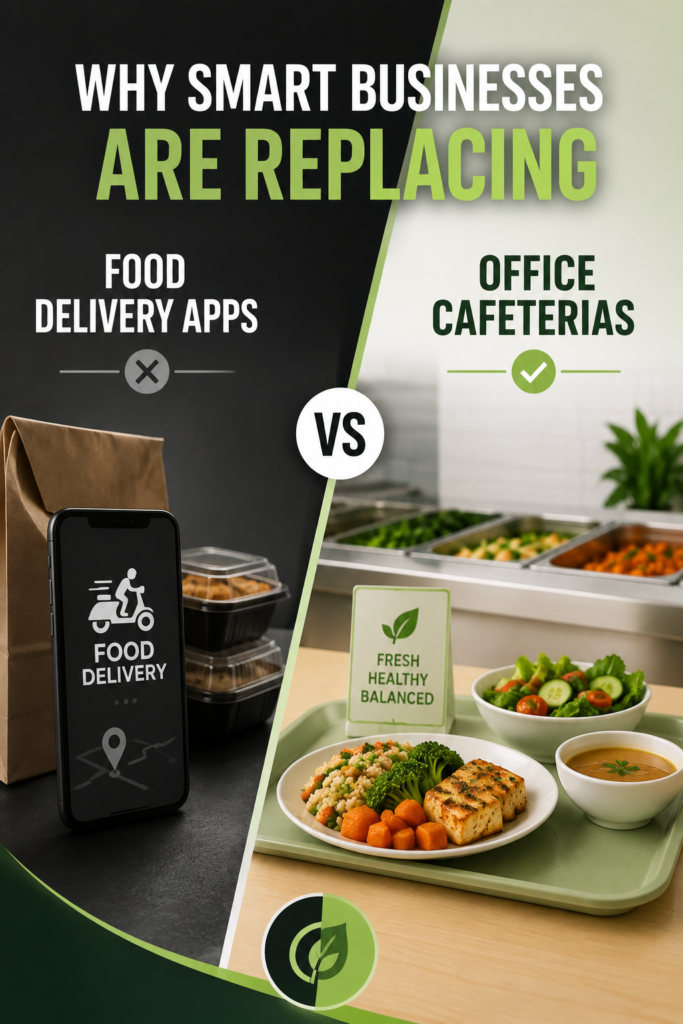
Food delivery apps have become a convenient option for many employees. With just a few taps, meals can be ordered from hundreds of restaurants. While this convenience is appealing, many businesses are realizing that relying on food delivery apps every day isn’t always the best solution for the workplace.
Instead, companies are investing in office cafeterias and professionally managed workplace dining services that offer fresh meals, better hygiene, and a more consistent employee experience.
An office cafeteria is no longer just a place to eat—it’s becoming an important part of employee well-being and workplace culture.
Let’s explore why more organizations are making this shift.
The Challenges of Food Delivery Apps in the Workplace
Food delivery platforms offer variety, but they also bring challenges that affect both employees and employers.
Common issues include:
- Delivery delays during peak hours
- Inconsistent food quality
- Higher daily food expenses
- Packaging waste
- Limited control over hygiene standards
- Employees spending time browsing multiple apps
These small issues can add up over time, reducing convenience and affecting productivity.
Why Office Cafeterias Are Making a Comeback
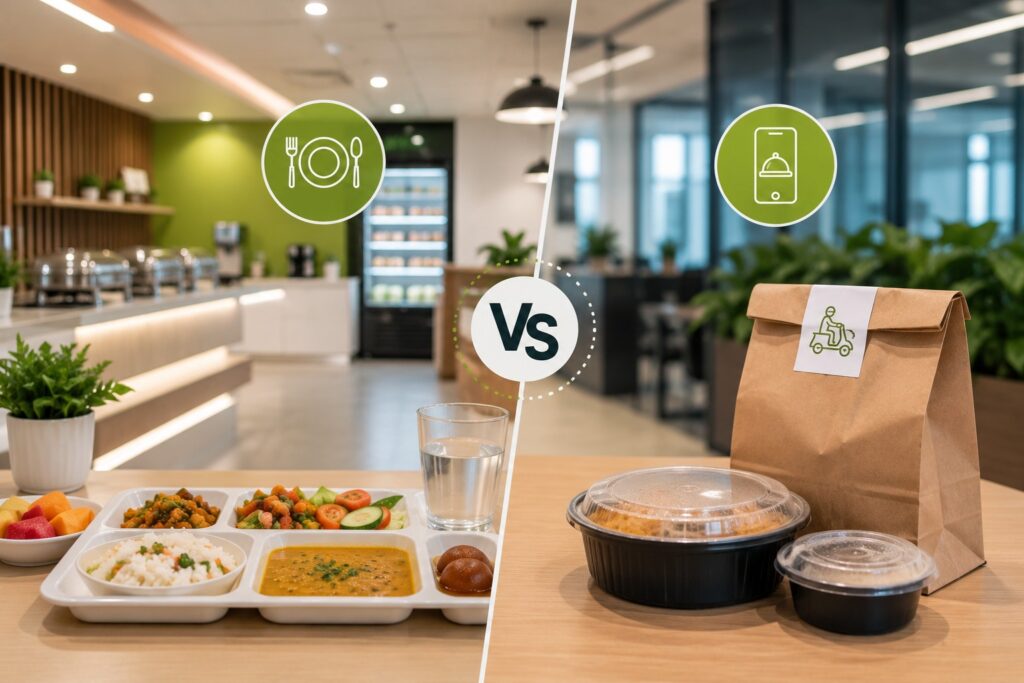
Modern office cafeterias are designed to do much more than serve meals.
They provide:
- Freshly prepared food
- Reliable meal timings
- Balanced menu options
- Hygienic food preparation
- Comfortable dining spaces
As more employees return to offices, businesses are recognizing the value of creating a better dining experience within the workplace.
1. Better Time Management
Ordering food every day often involves deciding what to eat, comparing restaurants, waiting for deliveries, and dealing with delays.
An office cafeteria eliminates these challenges.
Employees can enjoy timely meals and return to work without unnecessary interruptions, making lunch breaks more efficient.
2. Improved Food Quality and Hygiene
Businesses have greater oversight over food quality when meals are served through a trusted office cafeteria or corporate catering partner.
Professional workplace food services maintain:
- Fresh ingredients
- Hygienic kitchens
- Safe food handling
- Quality control processes
- Consistent meal standards
This gives employees greater confidence in the meals they consume every day.
3. Healthier Eating Habits
Food delivery apps often encourage quick choices that may not always be nutritious.
Office cafeterias can offer:
- Balanced meals
- Fresh vegetables
- Lean proteins
- Seasonal fruits
- Whole grains
- Healthy beverages
Providing healthier options supports employee wellness and long-term productivity.
4. Stronger Workplace Culture
Lunch isn’t just about food it’s also about connection.
A shared dining space encourages employees to:
- Interact with colleagues
- Build stronger relationships
- Collaborate informally
- Take meaningful breaks
These everyday interactions contribute to a more positive workplace culture.
5. More Cost-Effective for Businesses
While individual food deliveries may seem convenient, they often come with:
- Delivery charges
- Platform fees
- Price fluctuations
- Multiple vendor management challenges
A professionally managed office cafeteria offers predictable meal planning and can be more cost-effective over time, especially for growing organizations.
6. Better Employee Experience
Employees appreciate workplaces that make their daily routine easier.
An office cafeteria provides:
- Convenient access to meals
- Reliable service
- Comfortable dining areas
- Better meal choices
- Less waiting time
These small improvements contribute to higher employee satisfaction.
7. Reduced Packaging Waste
Daily food deliveries generate significant amounts of disposable packaging.
Office cafeterias help reduce waste by using reusable serving systems and minimizing unnecessary packaging, supporting sustainability goals.
The Role of Corporate Catering in Modern Offices
Not every business has the space or need for a full-scale cafeteria.
Professional corporate catering providers offer flexible workplace dining solutions, including:
- Daily employee meals
- Office cafeteria management
- Corporate tuck shop services
- Meeting refreshments
- Event catering
- Healthy snack stations
These services provide the benefits of workplace dining without requiring businesses to manage food operations themselves.
Is an Office Cafeteria Right for Your Business?
If your employees regularly rely on food delivery apps, ask yourself:
- Are lunch breaks becoming longer than necessary?
- Do employees frequently complain about delivery delays?
- Are food costs increasing?
- Is food quality inconsistent?
- Would employees benefit from healthier meal options?
If the answer is “yes” to several of these questions, it may be time to consider an office cafeteria or a corporate catering solution.
The Future of Workplace Dining
Modern businesses are focusing more on employee experience than ever before.
A well-managed office cafeteria supports:
- Better health
- Higher productivity
- Improved collaboration
- Stronger company culture
- Greater employee satisfaction
As workplaces continue to evolve, investing in better food solutions is becoming a smart business decision—not just an employee benefit.
Final Thoughts
Food delivery apps will always have their place, but they aren’t always the most efficient solution for the workplace.
An office cafeteria provides consistency, healthier meals, better hygiene, and a more connected workplace experience. It saves time, supports employee well-being, and contributes to a positive company culture.
At Ginger Foods, we help businesses create modern workplace dining experiences through customized corporate catering, office cafeteria management, and employee meal solutions. Our goal is to make workplace food convenient, nutritious, and enjoyable for every team.
Because when employees eat better, businesses perform better.
Frequently Asked Questions (FAQ)
Why are companies moving away from food delivery apps?
Many businesses are choosing office cafeterias because they offer more reliable meal service, better hygiene, healthier food options, and improved employee experiences.
How does an office cafeteria improve productivity?
Employees spend less time ordering and waiting for food, allowing them to enjoy timely meals and return to work refreshed and focused.
Is an office cafeteria more cost-effective than food delivery?
For many organizations, especially larger teams, a managed office cafeteria can provide better value through planned menus, consistent pricing, and reduced delivery costs.
Can small businesses benefit from workplace dining?
Yes. Even if a full cafeteria isn’t practical, corporate catering and meal programs can provide fresh, convenient food options for employees.
How can Ginger Foods help?
Ginger Foods offers corporate catering, office cafeteria management, and workplace dining solutions tailored to the needs of businesses of all sizes.